Why Banners Printing Still Matters for B2B Brands in 2026
September 11, 2026
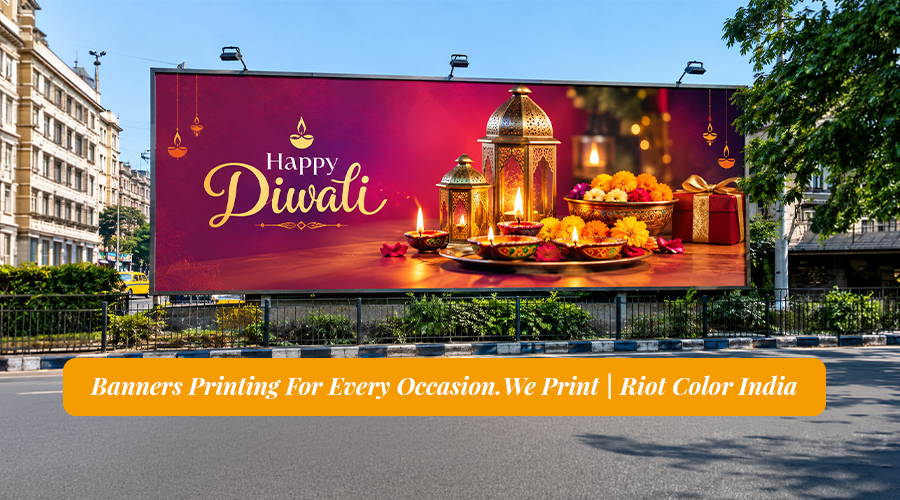
Every business, at some point, needs to say something loudly and quickly: a launch, a sale, an exhibition stall, a construction site update, a festival stall. And more often than not, the fastest way to say it is still a banner.
It sounds almost too simple for a 2026 marketing conversation dominated by digital ads and social media budgets. But walk through any commercial district in Kolkata or past any trade fair in Bhubaneswar, and you’ll notice banners haven’t gone anywhere. If anything, businesses are spending more thought on them, not less.
This piece is for anyone on the buying side of that decision, marketing heads, facility managers, event planners, franchise owners who need to understand what banners printing actually involves in 2026, and why getting it right matters more than most people assume.
Why Banners Still Work in a Digital-First World
Digital ads disappear the moment someone closes a tab. A banner doesn’t. It sits there, visible, for as long as it’s up during business hours, after hours, on weekends, through footfall spikes you didn’t even plan for.
That’s the real argument for printed banners in a B2B context. They’re not trying to compete with digital; they’re doing a job digital simply can’t. A banner outside a store during a festival sale reaches everyone walking past, not just the segment an algorithm decided to target. For local visibility, foot traffic, and on-ground brand presence, nothing quite replaces a well-placed banner.
And because banners are physical, they carry weight that a scrolling ad doesn’t. People trust what they can see in front of them. A clean, well-printed banner outside a business signals that the business is real, active, and worth walking into.
Custom Banners Printing: Why Generic Templates Don’t Cut It Anymore
A few years back, most businesses were fine with a standard banner company name, logo, maybe a tagline. That’s changed. In 2026, buyers expect custom banners printing that actually reflects a brand’s identity, not a template pulled off a printer’s shelf.
Custom work usually covers:
- Brand-accurate colours and typography
- Layouts built for the specific space (storefront, stage backdrop, stall, hoarding)
- Material choices suited to indoor or outdoor use
- Sizing that fits the actual location, not a generic standard
This matters more for B2B buyers than it might seem at first. A franchise chain rolling out ten outlets across different cities can’t afford ten different banner styles. Consistency is the whole point every location should look like it belongs to the same brand, which is exactly what custom banner work is meant to solve.

Large Format and Large Banners Printing: Where Size Becomes Strategy
There’s a reason large format banner printing has its own category separate from standard banners. Size changes how a banner functions. A small banner informs. A large one commands attention from a distance across a parking lot, down a street, from a highway.
Large banners printing is typically used for:
- Building facades and rooftop hoardings
- Highway-facing hoardings near industrial or commercial zones
- Stage backdrops at large corporate or public events
- Construction site branding, especially for real estate developers
The technical side matters here too. Larger prints need stronger materials to handle wind load, UV exposure, and repeated handling during installation. This is where a lot of cheaper vendors fall short. The print looks fine on day one, then fades, tears, or sags within weeks. For B2B buyers, that’s not just an aesthetic problem; it’s a repeated cost problem.
Outdoor Banners Printing: Built to Survive the Real World
Outdoor banners printing has to deal with conditions indoor printing never faces sun, rain, humidity, wind, and in many parts of India, extended monsoon seasons that test material durability directly.
A few things separate durable outdoor work from banners that don’t last:
- Vinyl Banners Printing, which remains the industry standard for weather resistance and colour retention
- UV-resistant inks that don’t fade after a few weeks in direct sun
- Reinforced edges and grommets that can handle wind without tearing
- Proper lamination for humidity and moisture resistance
For large outdoor banners especially, cutting corners on material almost always shows up fast. A hoarding that looks sharp for a month and then peels apart isn’t cheap. It’s expensive twice, once to print and again to replace.
Banner Printing for Festivals, Events & Seasonal Campaigns
This is one area where the Indian market genuinely stands apart. Between national holidays, religious festivals, and regional celebrations, there’s rarely a quiet month on the calendar and each occasion calls for a slightly different kind of banner.
Republic Day and Independence Day – These are big moments for civic bodies, schools, and corporate offices alike. Tricolour-themed banners go up outside institutions, government buildings, and business premises, often paired with flag hoisting events. Businesses use this window for goodwill messaging rather than hard promotion, so the tone tends to be patriotic and understated rather than sales-driven.
Diwali – Easily one of the busiest seasons for banner printers. Retail stores lean heavily on bright, festive banners announcing discounts, gift hampers, and limited-period offers. Malls and shopping complexes use large-format banners at entrances to set the festive mood before customers even walk in.
Christmas and New Year – Hospitality and retail businesses dominate this window. Hotels put up welcome banners for holiday packages, restaurants announce special menus, and retail chains run year-end clearance sales, all backed by banners designed around a colder, more festive visual palette than Diwali’s.
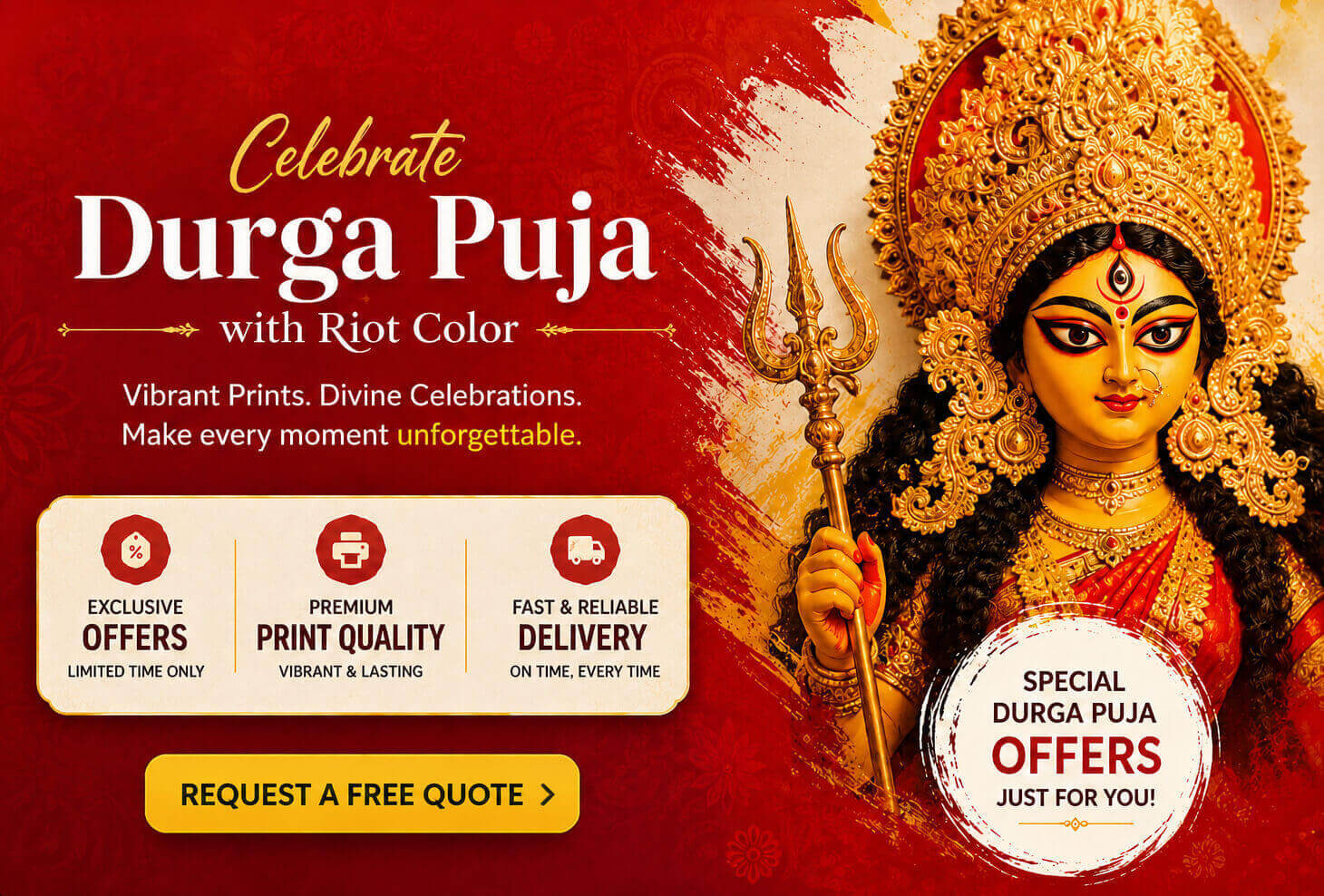
Durga Puja – If you have a prominent presence in Eastern India, and have particularly targeted cities like Kolkata and Howrah then Durga Puja (especially during Pandal sponsorships, common community event banners and brand tie-ups with various puja committees) provides an immense reach to huge numbers of footfall, concentrated over few days.
Onam – Retail & community branding During the festival of Onam, while businesses in Kerala have a concentrated effort (as do Malayalis everywhere else) for banners using traditional motifs and festival sales push, with associated advertising banners as well.
Pongal – Pongal A Similar kind of reach occurs when branding is involved with agricultural/ harvest themes associated with the Pongal festival that is celebrated across Tamil Nadu along with its retail push and community events.
Corporate Annual Events – Annual day celebrations, award ceremonies, and internal town halls all rely on stage backdrops and entrance banners to set a professional tone. These are usually custom-branded rather than festive.
Trade Exhibitions – Exhibition stalls live or die by visibility. A well-designed banner at a booth is often the first thing that pulls a visitor in from a crowded exhibition hall.
Product Launches – Whether it’s a retail brand or a B2B company unveiling new machinery, launch events almost always use large banners printing to build anticipation and mark the occasion visually.
The common thread across all of these is timing. Festival and seasonal banners have a narrow window to order too late, and the banner arrives after the moment has passed.

Which Type of Banner Printing Is Right for Your Business?
Not every business needs every kind of banner, and picking the wrong one usually means either overspending or underdelivering on visibility. Here’s a simple way to think about it.
If your priority is long-term outdoor visibility, a storefront sign, a hoarding, a facility entrance you want vinyl banners printed with UV-resistant ink and proper reinforcement. This is a one-time investment that should last months, not weeks.
If you’re planning a single event or a short campaign, promotional banners or event banners make more sense. These don’t need the same heavy-duty material as permanent outdoor signage, which also keeps costs down for something you’ll only display for a few days.
If your business operates across multiple locations, custom banners printing with a consistent brand template is worth the upfront design investment. It’s far cheaper to design once and print for every branch than to redesign for each city separately.
If you’re working with tight exhibition or launch timelines, large format banner printing paired with a vendor who has genuine in-house production capacity matters more than anything else. Design quality means little if the banner doesn’t arrive on time.
Riot Color India works across all four of these categories with a full in-house production unit, which means design, printing, and finishing all happen under one roof instead of being routed through third-party vendors. That’s a big part of why the company can offer multi-location installation capability for businesses that need consistent branding across several cities at once, rather than relying on a different local printer in each location.
Where Can Businesses Use Printed Banners in 2026?
The obvious answers storefronts, events, construction sites only cover part of the picture. Banners are showing up in more places than most businesses initially consider, and it’s worth mapping the full range.
- Storefront Branding – The most common use, but still the most effective for daily footfall
- Corporate Events – Town halls, annual days, internal celebrations, and leadership visits
- Trade Shows – Booth backdrops, directional signage, and sponsor walls
- Product Launches – Both retail-facing and B2B industrial launches
- Construction Sites – Project branding, safety notices, and “coming soon” property teasers
- Real Estate Campaigns – Show-flat directions, project launch hoardings, and site branding
- Festival Promotions – As covered above, tied closely to seasonal retail spikes
- Retail Promotions – Clearance sales, new arrivals, seasonal discounts
- Roadside Advertising – Hoardings positioned for maximum visibility to passing traffic
- Mall Promotions – Anchor store banners, seasonal decor tie-ins, and pop-up stall branding
- Institutional Events – Schools, colleges, and hospitals running admission drives or awareness campaigns
- Corporate Announcements – Mergers, new office openings, leadership changes, milestone celebrations
- Sponsorship Branding – Banners at sporting events, cultural festivals, and community gatherings where a brand is a visible sponsor
What ties all of these together is a simple point: a banner works anywhere people gather, pass by, or pause even briefly. The businesses getting the most value out of banners in 2026 aren’t necessarily printing more of them, they’re printing smarter, matching the right banner type to the right occasion.
Why Being Trusted by Big Industries Actually Means Something
There’s a difference between a printer who’s done a few jobs and one who’s been tested repeatedly by demanding clients. Riot Color India falls into the second category, being trusted by big industries across sectors that don’t tolerate late deliveries or inconsistent quality.
Working across sectors also builds a kind of practical knowledge that narrow specialists don’t get. A vendor who’s handled hospital signage, retail rollouts, and industrial site branding brings a wider set of problem-solving instincts to a project than one who’s only ever printed shop banners. That’s part of why Riot Color India makes a point of saying it can serve all major industries — the experience genuinely carries over from one project to the next.
This shows up clearly in where the company actually operates. Riot Color India serves all major cities, including Kolkata, Newtown, Howrah, Siliguri, Asansol, Durgapur, Guwahati, Darjeeling, Bhubaneswar, Patna, Ranchi, and Jamshedpur, giving businesses a single dependable point of contact instead of juggling separate vendors across every city they operate in.

Final Word: A Simple Tool That Still Does a Big Job
Banners aren’t glamorous. They won’t trend on social media or win a design award. But they do something a lot of flashier marketing tools can’t show up, physically, exactly where your customers already are.
Get the material right, get the sizing right, and work with a printer who treats the job with the same seriousness you treat your business. Do that, and a simple banner ends up doing more for your brand than most people expect.
Frequently Asked Questions
What material is best for outdoor banners?
Vinyl remains the go-to choice for most outdoor work. It handles sun, rain, and general wear far better than paper or fabric alternatives, which is why vinyl banners printing is still the industry standard for anything staying up for weeks or months.
What is the general turnaround for large format banner printing?
This really varies depending on the size and complexity of the banner. Most straightforward print orders will be ready between one and three days. Larger or more elaborate work, and projects requiring custom design, may take slightly longer. It’s always wise to clarify turn times in advance, particularly with event deadlines looming.
Can banners be reused for more than one event?
Absolutely, if made from durable material and stored away carefully between events. Most businesses now produce “dated” banners, to re-use for future marketing campaigns – a more economical choice than annually commissioning new designs.
Do I need different banners for inside and outside display?
Mostly, yes. Indoor banners may use much lighter materials, as there is no exposure to elements and for visual effect, and may be fabric. Outside banners need to be durable, a weather-resistant vinyl and to withstand sun, wind and rain over the lifespan of a banner, therefore U V resistant ink and reinforced eyelets are often included in its design.
For a major festival like Diwali or Durga Puja, what is the minimum recommended order time for banners?
Two to three weeks minimum, if it is at all possible. During a major holiday, demand spikes and printer schedules fill quickly. Ordering in advance leaves no room for design revisions close to the event.
Can small businesses afford festival or event banner campaigns?
Yes. Costs scale with size and material, so a small business can still get a strong festive banner without spending anywhere close to what a mall-scale campaign would cost. The key is matching size and material to the actual budget and space available.