Acrylic Sign Board: Types, Prices, LED Options & Buying Guide
June 18, 2026
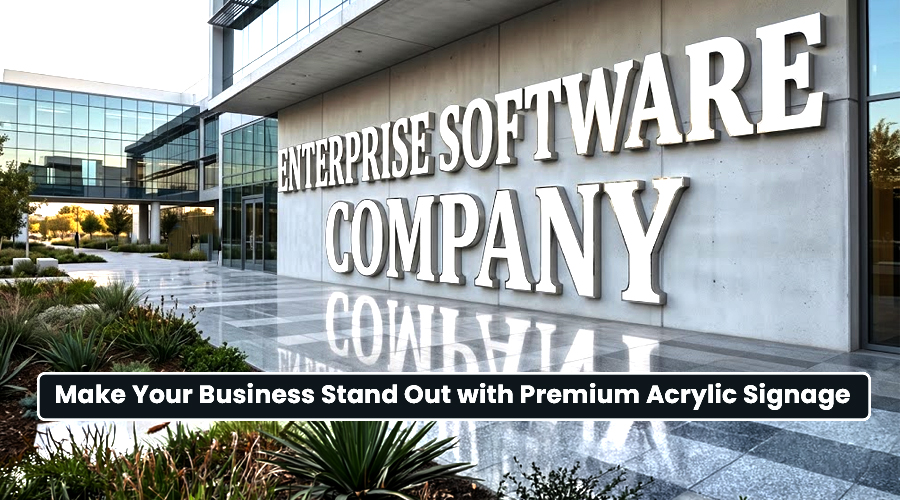
If you’ve ever walked past a clinic, a salon, or a small showroom and noticed a clean, glowing nameplate that looks almost like glass, that’s most likely an acrylic sign board. It’s a flat or 3D sign made from cast or extruded acrylic sheet, cut into letters, logos, or panels, and often lit from behind with LEDs. It’s fairly affordable as a basic non-lit panel, with LED and 3D letter versions costing more depending on size, thickness, and how detailed the design is. Most boards last anywhere from 5 to 10 years before the acrylic starts yellowing, especially if it’s sitting in direct sun all day.
Quick facts before we get into the details:
- Material: cast or extruded acrylic sheet, usually 3mm to 12mm thick
- Lifespan: 5–10 years depending on UV exposure and quality
- Lighting options: non-lit, edge-lit, backlit (glow), and LED module-lit
- Best suited for: indoor and semi-outdoor use; harsh outdoor exposure needs extra protection
- Widely used in retail, healthcare, hospitality, and corporate spaces across eastern India
Now let’s actually unpack what’s behind all of this.
The Secret Behind That Glass-Like Shine (It’s Not Glass)
Acrylic, technically called PMMA, is a plastic sheet prized for one simple reason: it looks like glass without the weight or the risk of shattering into a hundred dangerous pieces. There are two kinds you’ll come across: cast acrylic, poured and cured slowly, which gives better clarity and machining quality, and extruded acrylic, cheaper and faster to produce but a bit more prone to stress cracks when you cut or drill it.
This is the same raw material used for an acrylic name board, an acrylic logo, an acrylic letter board, or pretty much any acrylic signboard you’ve ever noticed at a reception desk. The difference between all of these is mostly in shape and finishing flat sheet cut into a panel, or routed and folded into 3D letters, or layered with a light source behind it.
Not All Acrylic Sign Boards Are Built the Same
Walk down any commercial street and you’ll spot half a dozen variations without even trying.
Acrylic name boards are the simplest form of a flat acrylic panel with vinyl-cut or printed text, mounted with standoffs outside an office, clinic, or apartment gate. It is available in Riot Color India, so the base panel itself doesn’t have to be plain white if your brand needs more personality. An acrylic logo sign is basically the same idea, just trimmed down to a brand mark instead of full text, often placed behind reception counters.
A 3D acrylic letter sign board uses individual acrylic letters for signs, cut from thicker sheet (usually 10mm to 20mm) and mounted with a gap from the wall, which throws a shadow and gives the whole thing depth. Whether it’s a 3D acrylic sign board with separate letters or a single flat design, the cutting and polishing work is what makes it stand out.
Then there’s the lit category, which people search for under a handful of different names acrylic sign board with LED, acrylic board with light, acrylic backlit board, illuminated acrylic signs, acrylic light signage, acrylic lighted signage, acrylic glow sign board, acrylic lit sign. They’re all describing roughly the same thing: a light source sitting behind or beside the acrylic so it glows.
Beyond these, you’ve got the acrylic menu board common in cafes and small restaurants, the acrylic dental sign board that clinics and diagnostic centres lean on because it looks sterile and professional without screaming “advertisement,” and bigger formats like the acrylic advertising board or acrylic box signage used outside showrooms, usually framed and lit to survive a little more weather than a plain panel.

Why Your Sign Looks Dull After Dark (And How LED Fixes It)
Here’s something worth knowing if you’re comparing an acrylic led sign against a plain one: the lighting completely changes how a sign performs after dark, and for most shops, evening visibility actually matters more than daytime visibility. Someone searching “acrylic led sign board near me” has usually noticed a competitor’s glowing signage at night and wants the same effect for their own shop.
There are two common ways to light one up. Edge-lit signs push light in from the side of the sheet, which travels through the acrylic and escapes through laser-etched or sandblasted areas sharp, even, and ideal for thin lettering. An acrylic sign with LED placed behind it instead (sometimes called halo-lighting) creates a softer glow that spills out around the edges of letters or panels rather than through them.
For an acrylic lighting board indoors, you don’t need anything too rugged. But for a shopfront facing the street, go for at least IP65-rated LED modules that one spec alone saves a lot of repair calls down the line.
What You’re Really Paying For
People often ask about acrylic sign board price or acrylic sign board cost expecting one straight number, but it really comes down to which tier you’re picking:
- Plain acrylic name board (no light) – the most budget-friendly option, perfect for offices, clinics, and small shop entrances.
- Acrylic board with light (edge-lit) – a step up, priced mainly by the LED module and driver quality you choose.
- Acrylic LED sign board / glow sign – sits a bit higher than edge-lit because of the denser LED layout needed for an even backlit glow.
- 3D acrylic letter sign board – generally the priciest option, since it’s charged more by letter count and finishing than by overall area.
If you’re comparing acrylic led sign board price or 3d acrylic letter sign board price across a few vendors, ask each one to break the quote down by material, lighting, and labour separately; it makes comparing apples to apples a lot easier than a single lump-sum figure.
Your local acrylic sign board maker will give you an exact number based on thickness, mounting hardware, and whether installation is included, so treat any number you see online as a starting point for the conversation, not the final word.

Acrylic vs PVC vs Metal vs Vinyl Signage: Which One Actually Wins?
Acrylic isn’t the only option out there, and it’s not always the right one. Here’s how it stacks up against the usual alternatives:
Acrylic
- Look: glass-like, glossy, premium feel
- Durability: holds up well indoors, moderate outdoors without UV protection
- Best for: clinics, offices, retail, logo signs
PVC (foam board)
- Look: matte, flat finish
- Durability: decent, but lightweight and easier to dent or warp
- Best for: temporary displays or budget signage
Metal (aluminium/stainless steel)
- Look: premium, industrial, heavy-duty
- Durability: excellent, genuinely weatherproof for years
- Best for: outdoor signage and long-term branding
Vinyl (flex/banner)
- Look: printed, flexible, easy to roll up
- Durability: poor to moderate, fades and tears over time
- Best for: short-term promotions and event banners
If you want something that genuinely lasts outdoors for a decade without fading, metal usually wins. If you want a sign that looks expensive without the expensive part, acrylic signage hits that sweet spot.
Indoors vs Outdoors: Where Acrylic Signage Truly Shines
Indoor acrylic signage is where this material genuinely shines: no UV stress, no rain, no temperature swings, just clean visuals that hold their colour for years. Outdoors are trickier. Direct, all-day sun will eventually yellow standard acrylic, and that timeline shrinks fast in places with intense summer heat. If your board has to sit outside, ask specifically for UV-stabilised acrylic sheet, and make sure the LED driver, if there’s one, is rated for outdoor humidity.
Who’s Actually Buying These Signs?
Acrylic signage isn’t tied to one type of business it’s spread across just about every sector that needs a clean, professional first impression:
- Retail Shops and Boutiques – Name boards and backlit logos that hold attention from across the street
- Clinics, Hospitals, and Diagnostic Centres – Sterile, calm-looking reception boards and directional signage
- Restaurants and Cafes – Acrylic menu boards and glowing entrance signs that double as a photo spot
- Corporate Offices and co-working Spaces – Minimal logo signs behind reception desks
- Real Estate and Builders – Site signage and project branding boards at sales offices
- Educational Institutes and Coaching Centres – Entrance boards and notice displays
- Salons, Spas, and Jewellery Showrooms – Premium-feeling backlit signage that matches upscale interiors
- Automobile Showrooms and Dealerships – Large-format acrylic box signage for brand visibility
From Kolkata to Patna – Acrylic Signage Demand Is Spreading Fast
This isn’t just a metro-city trend anymore. Demand for acrylic sign boards has been growing steadily across eastern and northeastern India:
- Kolkata – the biggest concentration of orders, with hotspots in Salt Lake, New Town, Gariahat, Park Street, Howrah, Behala, Dum Dum, Tollygunge, and Rajarhat, where retail and clinic signage turnover is constant. Around Durga Puja and Diwali, storefronts here go all in on a Riot Color India, and acrylic boards hold up to that festive treatment far better than printed flex.
- Siliguri – rising demand from hotels, retail chains, and clinics as North Bengal’s commercial activity expands
- Guwahati – Assam’s commercial hub, where corporate offices and showrooms are increasingly switching from flex banners to acrylic
- Durgapur – an industrial belt where retail outlets and automobile dealerships are driving fresh signage orders
- Patna and other parts of Bihar – one of the fastest-growing markets right now, as retail chains, clinics, and coaching institutes expand beyond the older flex-and-vinyl signage habit

Finding an Acrylic Sign Board Maker Near You
Typing “acrylic sign board near me” or “acrylic name board near me” into Google will throw up a long list, and honestly, not all of them are equal. A few things worth checking before you commit:
- Ask to see actual work, not just a catalogue any acrylic sign board maker near me worth hiring should have photos of boards they’ve installed locally, not stock images pulled off the internet
- Ask whether they fabricate in-house or outsource the cutting genuine acrylic sign board manufacturers cut and assemble on their own premises, which usually means better quality control and faster turnaround
- If your search for “acrylic board maker near me” or “acrylic signs near me” turns up someone offering installation plus a warranty on the LED module, that’s generally a safer bet than the cheapest quote you get
- Whether you’re in Kolkata, Siliguri, Guwahati, Durgapur, or Patna, call and ask directly how long they’ve been making these boards, and request two or three references a two-minute conversation answers more than a dozen scattered reviews ever will
The Two-Minute Habit That Keeps Your Sign Looking Brand New
Acrylic scratches more easily than glass, so skip the glass cleaner and paper towels. A microfiber cloth with mild soapy water does the job without leaving fine scratches that dull the surface over time. Avoid ammonia-based cleaners completely; they cause micro-cracking on acrylic after months of repeated use. If your sign has an LED module, check the driver box every few months, especially before monsoon season, since moisture is usually what fails first, not the acrylic itself.
An acrylic sign board isn’t just a nameplate, it’s often the first thing a customer notices before they even walk in. Whether you’re comparing lighting options, sizing up local makers, or just trying to figure out which type fits your business, the decision usually comes down to where the sign will sit and how long you want it to last. Get those two answers right, and the rest thickness, lighting, lettering style tends to fall into place on its own.
Get your premium acrylic sign board from Riot Color India that brings you an outstanding result and helps you to raise your business branding on top. Riot Color India has delivered acrylic sign boards for retail stores, hospitals, educational institutes, restaurants, and corporate offices across all prime locations in India.
FAQs About Acrylic Sign Boards
Is an acrylic sign board good for outdoor use?
Yes, but with conditions go for UV-stabilised acrylic and a weatherproof LED driver if it’s lit. Plain indoor-grade acrylic will yellow faster under constant sun.
What's the difference between acrylic and PVC sign boards?
Acrylic looks glossy and glass-like, while PVC is matte and flatter looking. PVC is cheaper and lighter but doesn’t hold up as well over years of daily use.
Can acrylic sign boards be made in different colors?
Definitely acrylic sheets come from frosted whites and deep blacks to neon shades, and that range is a big reason it’s popular for festive, vibrant storefronts and salons all across India.
How long does an acrylic LED sign board last?
The acrylic sheet itself can hold up for 8–10 years indoors. The LED module is usually the first part that needs replacing, typically after 4–6 years of daily use.
Is a 3D acrylic letter sign board more expensive than a flat board?
Yes, generally. The 3D acrylic letter sign board price is higher because each letter needs individual cutting, polishing, and sometimes its own internal lighting.
What thickness of acrylic is best for a sign board?
3mm to 5mm works fine for small indoor name boards. For 3D letters or larger outdoor panels, 10mm to 20mm gives better strength and a more premium finish.
Do acrylic dental or clinic sign boards need anything special?
Not really most clinics go with a simple backlit or edge-lit acrylic panel since it looks clean and professional under bright reception lighting, which matters more than ruggedness in an indoor setting.
Can I get an acrylic sign board outside Kolkata, like in Siliguri or Patna?
Riot Color India now serves smaller cities directly or through local partners, so businesses in Siliguri, Guwahati, Durgapur, and Patna no longer have to rely purely on hyperlocal fabricators for quality work.